
Leather terminology in interior furniture
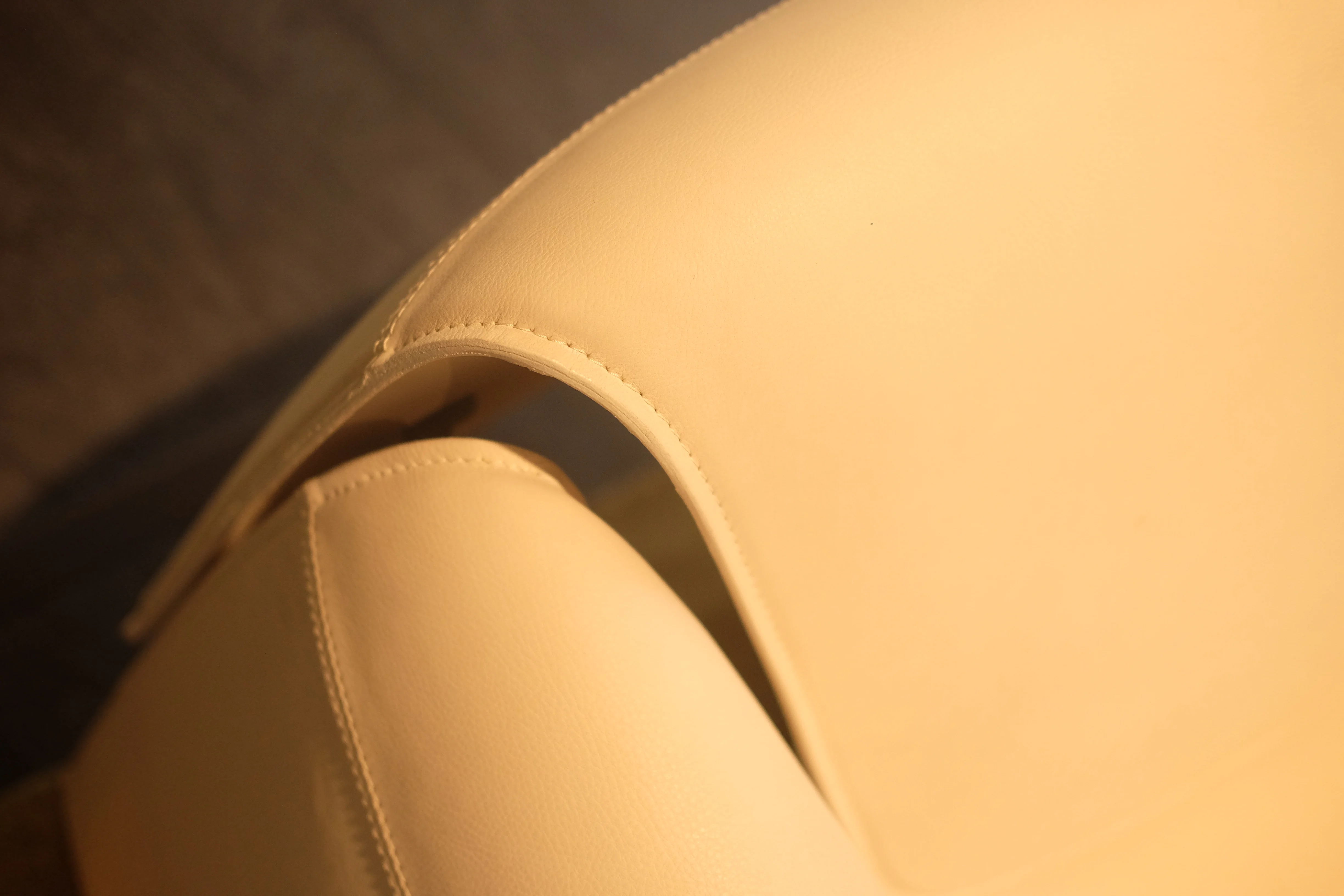 In interior furniture, cowhide leather is a premium, richly nuanced material: its fibre structure, tanning method and surface finish determine how it feels to the touch, how durable it is and how its beauty evolves over time. Understanding leather terminology helps customers choose the right type of leather to suit the aesthetics, lifestyle and budget of their project.
This article summarises 24 common terms, explaining cowhide leather in interior furniture in a brief, simple and easy-to-understand way.
1. Full grain leather:
This is the very top layer of the hide, retaining the entire natural grain without much sanding or processing. As a result, it offers the highest durability, excellent breathability, and it grows more beautiful the more it is used over time.
2. Top grain leather
This is full grain leather that has been lightly sanded to remove scars and coated with a smoother protective layer. The leather remains soft and natural, but is more uniform in colour, more durable and easier to clean than full grain.
3. Corrected Grain leather
Genuine leather that is sanded and coated with paint or embossed to hide surface imperfections. The result is a flat, uniform and easy-to-maintain surface, but it loses its inherent natural character. You can think of it as genuine leather that has been "made up" again to look even and beautiful.
4. Split Leather
Cowhide is usually quite thick, so during processing it is often split into several layers. The topmost layer (full grain or top grain) is the most beautiful and durable. The remaining lower layer is called split leather – this type has no natural grain, its surface is somewhat rough and it is less sturdy. To make it usable, a layer of PU or coloured paint is often applied on top so that it looks more like genuine leather. Split leather is not premium enough to upholster an entire sofa, but it is very useful in less visible or low-contact areas such as the back of a chair backrest, the underside of a sofa, or the sides of a cabinet.
5. Microfiber leather
This is a premium synthetic leather woven from ultra-fine polyester fibres that mimic the structure of genuine leather, coated with a thin PU layer to create grain and colour. Microfiber leather is durable, scratch-resistant, water-resistant and easy to clean, making it suitable for hot and humid climates; however, it does not feel as "warm" to the touch as genuine leather, so this type of leather is often used in low-contact areas such as the underside of a tabletop or as cabinet lining.
6. Aniline Leather
Aniline is a unique leather dyeing technique. Aniline dye penetrates deep into each leather fibre without covering the natural grain, pores or small marks on the surface, creating refined colours completely free of any polyester or other pigments. As a result, the leather retains the true natural look of the cowhide, appears very elegant and feels soft and smooth to the touch.
However, because it has no protective coating, the leather easily attracts dirt, scratches easily and absorbs water if not cared for properly. It is therefore usually used in areas that are not used too frequently.
7. Semi-Aniline Leather
Dyed like aniline leather but with an additional thin protective coating that helps the leather resist dirt, water and light scratches while preserving its natural character and increasing durability.
8. Pigmented Leather
This is leather coated with a thick layer of colour on the surface. This coating helps hide all scratches and uneven marks on the leather, making the surface look smooth and uniform in colour. Thanks to the protective coating, the leather is very durable, resists dirt, resists fading, and is easy to wipe clean when it gets wet or dusty.
However, because the coating is quite thick, the leather no longer has a clear natural grain and loses the truly soft feel of the original leather.
9. Nubuck Leather Nubuck is genuine cowhide, taken from the topmost layer of the hide (the best part). The outer surface is then lightly sanded to create a smooth, velvety feel to the touch. However, its drawback is that it easily absorbs water and attracts dirt; if it gets wet, that spot may become darker than the rest. Therefore, this type of leather is often used in the bedroom, such as upholstering beds or lounge chairs, or in low-contact areas that need careful care, keeping it away from damp places or contact with liquids.
10. Suede Leather
This is the back side of the cowhide layer, sanded to create a spongy, velvety-smooth surface, making it soft, light and warm to the touch; however, it is also less durable than the top layer of leather. Suede easily attracts dust and absorbs water, so if not carefully maintained, it will become stained or darken where it comes into contact with water or sweat.
11. Oil Leather
This is genuine leather that has been coated or soaked with special oil and wax during processing. The oil layer makes the leather soft, supple, gives it a light sheen and better water resistance. When you touch it, you will feel a smooth, slightly slick surface with a light natural "oily" quality – that is the oil layer protecting the surface. In addition, Oil Leather is a general name for the group of genuine leathers treated with oil and wax during the tanning process. Within this group there are many different types of leather such as pull-up leather, waxed leather and crazy horse leather, depending on the ratio of oil to wax and the surface treatment.
12. Embossed Leather
Embossed means stamping or printing a pattern in relief onto the leather surface. This type of leather is made by using a patterned metal mould (such as pebble grain, crocodile grain, natural leather grain, etc.) and heat-pressing it onto the genuine hide. Thanks to this process, the leather surface has a uniform, attractive pattern that hides scars, scratches or less attractive parts of the leather. As a result, embossed leather makes the leather look more elegant, more even in colour and gives it its own distinct style.
13. Patent Leather
This is leather coated with a special glossy lacquer, giving the surface a mirror-like shine. Thanks to this coating, the leather looks very striking, luxurious and strongly reflects light as if it had been carefully "polished". However, the glossy coating also makes the leather difficult to stretch, prone to scratches and prone to cracking if bent frequently. In addition, the glossy surface can easily show fingerprints or small scratches after prolonged use. It is therefore often used for decorative details or small accents in interior furniture, for example armrests or sofa trim.
14. Vegetable - Tanned Leather
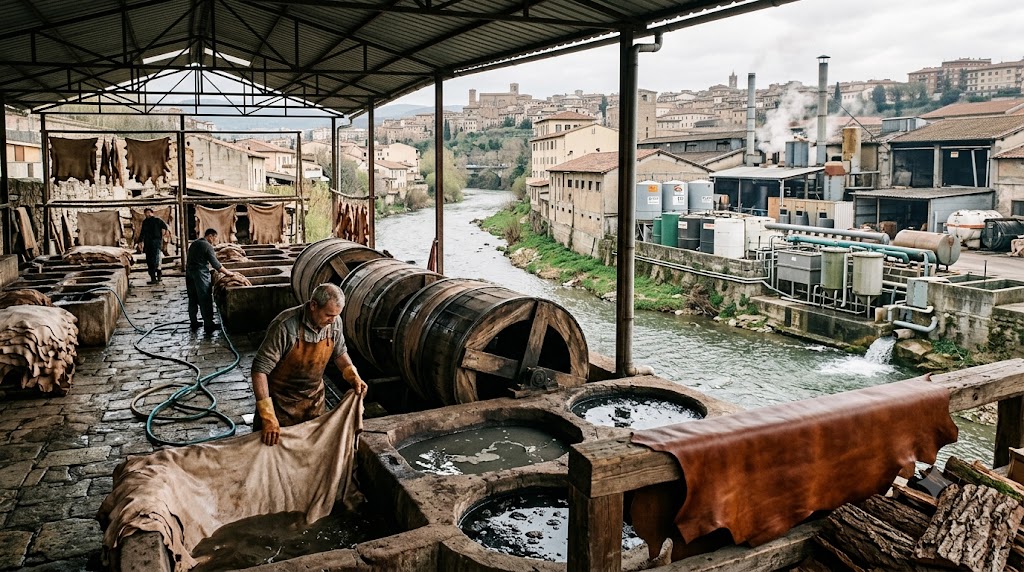
This is leather treated with natural extracts from bark, leaves or roots. Because the process is entirely natural, vegetable-tanned leather is safe, environmentally friendly and retains the natural scent of the cowhide. The distinctive features of this type of leather are: it is a little stiffer when newly made, but the longer it is used the more supple it becomes. The leather colour changes over time (usually becoming darker and glossier), creating a very distinctive "elegantly aged" character. It does not withstand water as well as chemically tanned leather, so it needs to be kept in a dry place. It is often used for chair armrests, leather straps and premium interior decorative details.
15. Chrome-Tanned Leather
This is genuine leather treated with chromium salts during the tanning process. This substance softens the leather quickly and helps it retain its suppleness and colour for a long time. Thanks to this method, the leather shrinks less, fades less, and is not as stiff as vegetable-tanned leather. The production time is also much faster (just a few days instead of a few weeks). Chrome-tanned leather has a soft, smooth, evenly coloured surface and withstands humidity well, so it is very common in furniture production today. Being soft, durable and reasonably priced, this is the most common type of leather in the modern furniture industry.
16. Saddle Leather
This is a line of thick, firm genuine leather, tanned using the vegetable method and then coated with oil or wax to increase suppleness and water resistance. The name "saddle" originates from the fact that this type of leather was used to make saddles – where durability, load-bearing strength and a particularly firm, smooth feel to the hand are required.
Saddle leather commonly appears in premium handcrafted products: thick leather chairs, straps, armrests or backrests, and more.
17. Patina (the "colour-developing" layer)
"Patina" is the phenomenon in which the surface of genuine leather changes in colour and sheen over the course of use.
When a genuine leather sofa is used every day – sitting on it, touching it with your hands, light shining on it – the natural oils from human skin, the humidity in the air, and gentle friction gradually make the leather glossier, darker and smoother. This is not damage, but rather a sign of high-quality genuine leather.
18. Fat Wrinkles
These are natural folds that form in the neck, shoulder and belly areas of the cow, where the skin stretches a great deal. They are not a defect, but a sign of genuine leather, giving the product a natural, authentic look. Their characteristics: every piece of genuine leather has a different degree of wrinkling, no two pieces alike. When dyed, these wrinkles remain, creating a natural, "living" and more elegant appearance. Manufacturers often keep the leather with light wrinkles for the seat or backrest to enhance its natural, premium character.
19. Hand-rubbed Leather
This is genuine leather that is dyed and coloured entirely by hand, rather than using an automatic spray machine. The craftsman uses cotton, cloth or a sponge to rub each layer of colour onto the leather, then wipes, blends and polishes it by hand to create a natural mottled colour effect – darker in some areas, lighter in others, with depth. Each piece of leather produced has its own hue, no two pieces alike. This type of leather clearly shows craftsmanship, refinement and carries high artistic value.
20. Double-face Leather
Normally, genuine cowhide has only one beautiful side (the outer side with natural grain), while the inner side is usually rough, coarse or fibrous, so only one side is used. But with Double-face Leather, both sides of the hide are carefully treated – for example polished, oil-coated, dyed or smoothly sanded – so that both sides can be used. As a result, double-face leather is beautiful and durable on both the inside and the outside, without needing an additional fabric or backing leather when sewing. Double-face leather is therefore often used in sofas or chairs with exposed seams, or in premium designer furniture where one wants both the inner and outer sides to look equally beautiful.
21. Edge Painting
This is the step of applying a special glue or paint onto the leather edge after cutting, to seal the leather fibres and create a smooth, beautiful edge that does not fray or become fibrous. When leather is cut, the edge usually exposes spongy fibres, so if left untreated it will delaminate, become rough or absorb water over time. Therefore, after cutting the leather, the craftsman applies a specialised edge paint in multiple thin layers, sometimes lightly sanding between layers to create a smooth, rounded, refined edge. The edge colour is usually matched to the leather colour or given a light contrast to create an accent.
22. Stitching
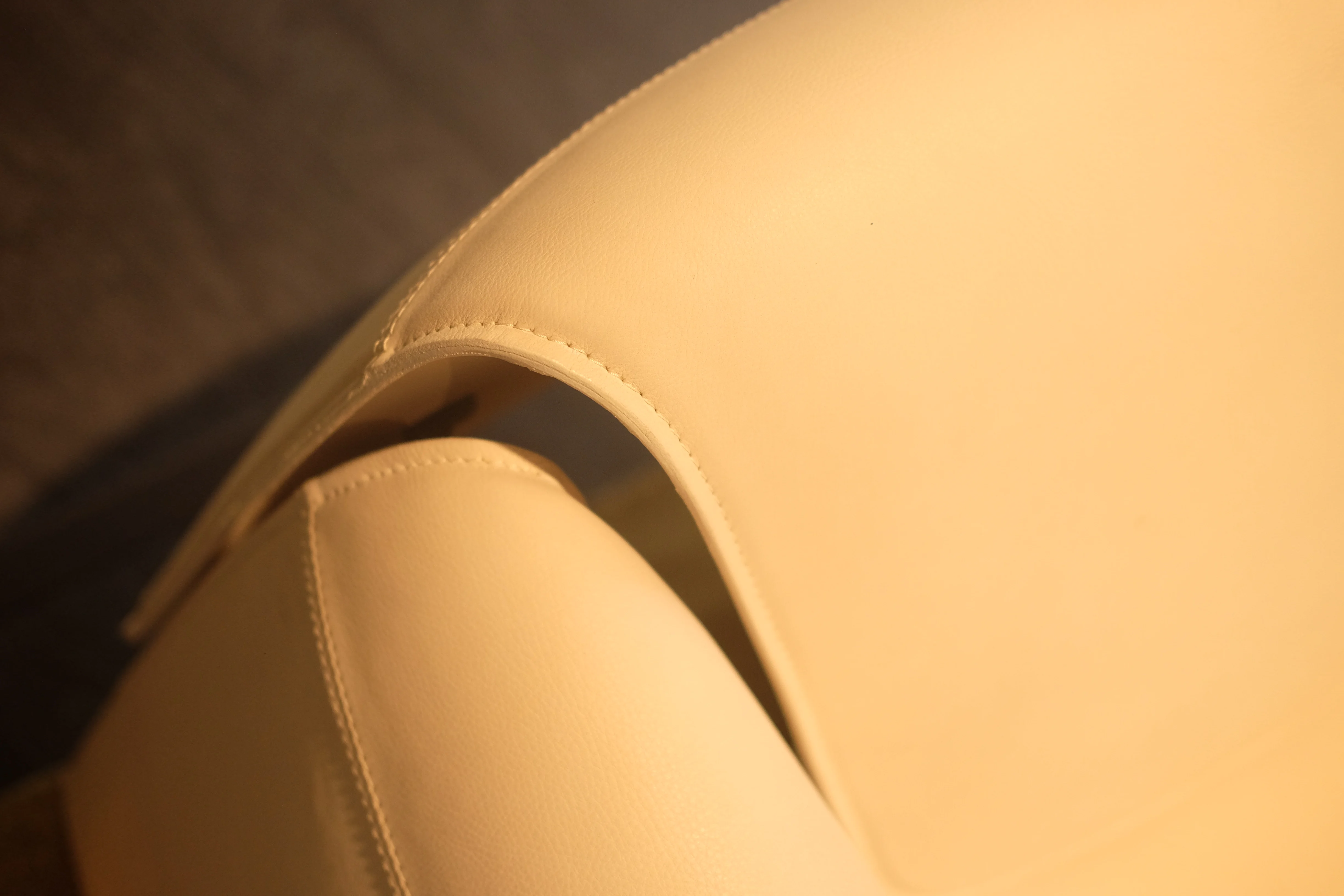
"Stitching" refers to the seam threads used to join pieces of leather together when making sofas, chairs, bags or other leather products. In addition to holding the leather firmly in place, the stitching also plays a decorative role – creating an accent for the product. There are many different stitching styles such as raised stitching, recessed stitching and edge stitching. Beautiful, straight, evenly worked seams reflect the high craftsmanship of the maker, while crooked or loose stitching will make the product lose its form, come apart quickly and look less refined.
23. Grain Match
Grain matching is the process of selecting pieces of leather with similar grain – in grain direction, size and colour – so that when assembled, the surface looks seamless, natural and harmonious like a single solid piece of leather. This is a very time-consuming stage that requires the craftsman's keen eye, because choosing pieces even slightly out of alignment will make the sofa look "unevenly matched" and lose its premium quality.
24. Grain
"Grain" means the leather grain, that is, the natural pattern that appears on the surface of a genuine cowhide. Each cow has a different grain – some have a fine, smooth grain, some have a large, coarse grain – depending on the breed of cow, its age and the position from which the leather is cut. Genuine leather grain is usually not perfectly even; looking closely you will see small pores or fine veins, and it is precisely these natural details that give genuine leather its depth.
In production, the grain is sometimes re-embossed to create uniformity, but the natural grain is always considered the most beautiful and valuable. Each piece of leather has a different grain, no two pieces alike; the clearer the grain and the more natural the pattern, the more genuine and premium the leather.
The terms above help you understand each type of leather and recognise the true quality of a furniture product – from its fibre structure and finishing layer to how it feels to the touch. Cowhide leather is not merely a material, but also a story of craftsmanship, time and lifestyle, where beauty matures with the passing years.
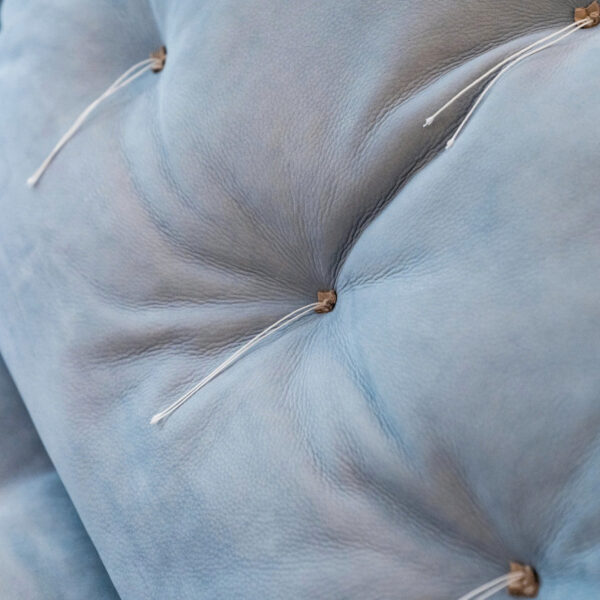
Visit the Amy Living showroom to experience firsthand the various types of cowhide leather used in premium interior furniture.
Credit: Ly Lien