
Metal Materials in Freestanding Furniture Production
The Role of Metal in Made-to-Measure Furniture
In the world of freestanding furniture, metal is not merely an auxiliary material used to support the structure; it is the “backbone” that expresses the proportion, precision and craftsmanship of the maker. A precisely machined detail or a solid brass element that has been delicately finished can determine the sense of refinement of an entire piece – from a chair or a table to the smallest handle.
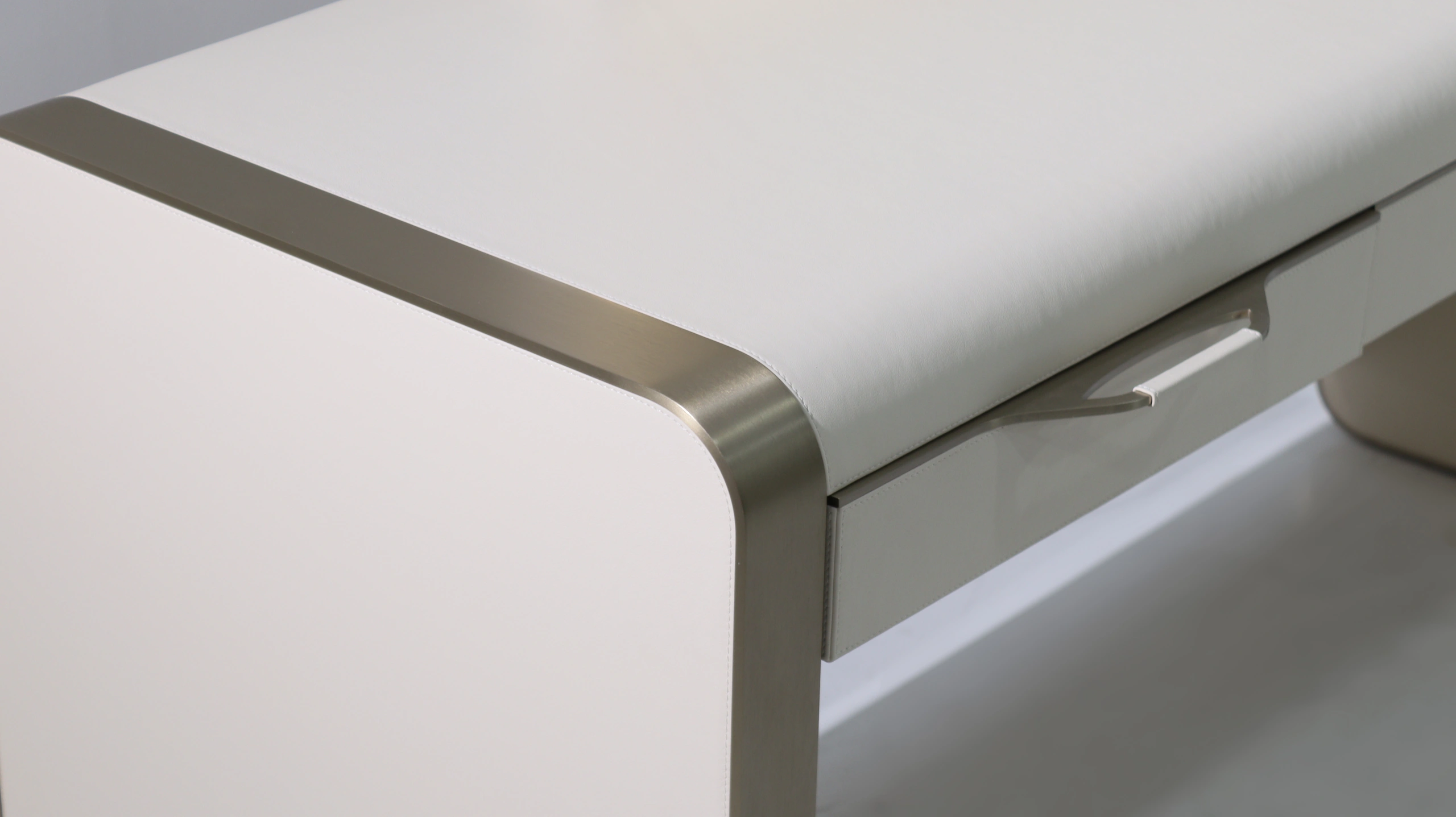
When used purposefully and finished with finesse, metal enhances the elegance and luxury of a piece. However, overuse or poor finishing technique will produce the exact opposite effect.
Types of Metal Commonly Used in Furniture
Stainless Steel 304 (SUS 304) – Durable, Modern and Easy to Maintain
SUS 304 is the most widely used stainless steel in furniture production thanks to its durability, high stability, ease of machining and low maintenance requirements. This material bends, welds and CNC-cuts easily, making it well suited to details that call for high precision and slender lines. It has a moderate weight and little deformation; it does not oxidize into a green–brown patina like brass; its surface is safe, odorless and requires no chemical coating, making it ideal for indoor living spaces.
Common finishes of SUS 304
Mirror Finish
- A highly polished surface that reflects light strongly, creating a luxurious, dazzling appearance.
- Usually used for decorative surfaces with little contact.
- Prone to showing fingerprints and scratches, requiring regular maintenance
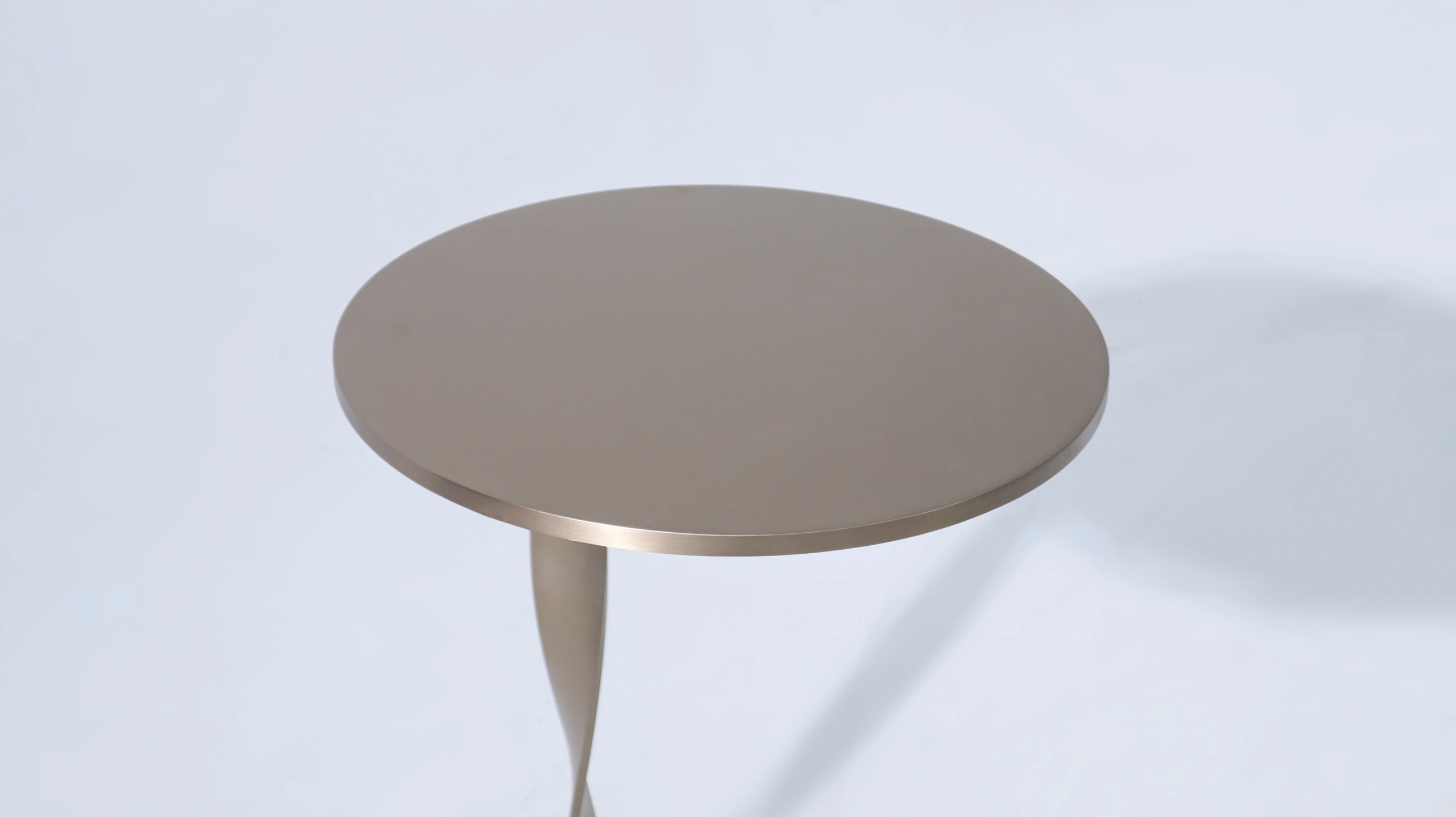
Hairline, Brushed Finish & Matte
- A surface with fine brushed lines running in one direction, creating a linear texture.
- Delivers a refined appearance. Hides scratches and fingerprints well, with lower maintenance than a Mirror Finish.
- Suitable for frequently touched surfaces and structural frames
Satin / Matte Finish
- A soft, matte feel with little reflection, leaning toward simplicity and visual softness.
- Fingerprints are almost invisible.
- Ideal for modern, minimalist or quiet luxury furniture.
Sanding / Sand-Texture Coating
- A matte texture coating that creates a fine-grained effect on the stainless steel surface, giving a sturdier feel and better scratch resistance.
- This effect is not an inherent metal finish but a coating applied over the stainless steel when a special color or texture is needed.
Stainless Steel 316 (SUS 316) – Superior Corrosion Resistance
Some environments with high corrosivity — such as coastal areas with salt spray, high humidity, or exposure to chlorine — call for SUS 316. Thanks to the addition of molybdenum (Mo), SUS 316 offers superior corrosion resistance, limiting pitting and keeping the surface far more stable than SUS 304. It is therefore a suitable choice for outdoor metal details, bathrooms, damp areas or any location that requires long-lasting durability.
Solid Brass – Emotion, Time and Natural Patina
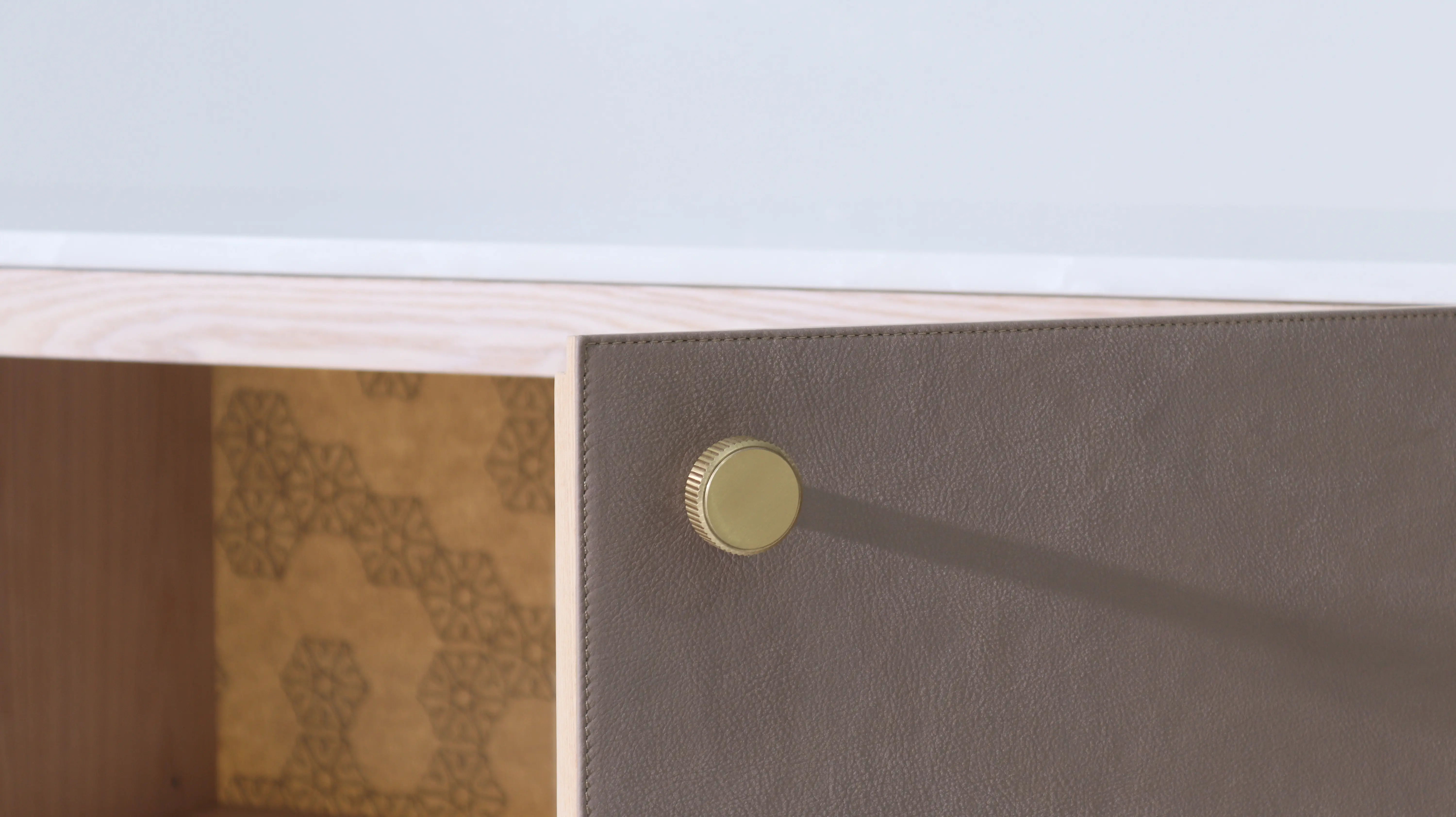
Solid brass is a traditional alloy that brings warmth and timeless elegance. Beyond conveying a handcrafted, luxurious feel, solid brass also develops a natural patina over time – gentle traces of oxidation that add depth and individual character to each piece.
Every change in color or interplay of light and shadow on the brass is not a flaw but proof of use, turning the metal into a “living” part of the space.
The Metalworking Process in High-End Furniture
- CNC Cutting – Precise Shaping
Metal is cut using a laser or CNC cutter to ensure clean cuts, sharp edges and absolutely accurate dimensions. This is the foundational step for details with refined forms, slender lines or even curves. - Bending – Shaping to the Design
Depending on the type of stainless steel or brass, the material is bent using specialized machines or by hand for special details. The curve must be smooth, without creases or surface deformation. - Welding – Seamless Connections
In high-end furniture, TIG or MIG welding is used to create smooth, strong seams that are almost “invisible” after finishing. - Grinding – Leveling the Surface and Removing Welds
The metalworker grinds each spot by hand, ensuring the flatness and seamlessness of the surface. This is the step that determines whether the piece achieves a “smooth – flowing – uniform” feel. - Polishing or Creating the Finished Texture
Depending on the design style, the surface will be: mirror-polished, hairline or brushed, or made matte
Each technique demands a high degree of uniformity, with no misaligned scratches and no machine swirl marks left behind. - Protective Coating (Coating / PVD)
For brass or stainless steel, a protective layer helps stabilize the color, prevent oxidation and extend the lifespan.
In high-end pieces, PVD technology is used to create champagne gold, rose gold, titanium black and other colors that are far more durable and crisp than conventional paint.
Metal – A Measure of Craftsmanship in Made-to-Measure Furniture
In a bespoke freestanding piece, every detail is exposed to the light. An imperfect weld, a joint misaligned by a few percent or an inconsistent metal tone is enough to diminish the overall sense of luxury.
For Amy Living, each piece is not only meant to look beautiful on the day of handover, but also to retain its form, solidity and stability after many years of use. Preserving the true spirit of made-to-measure craftsmanship.